
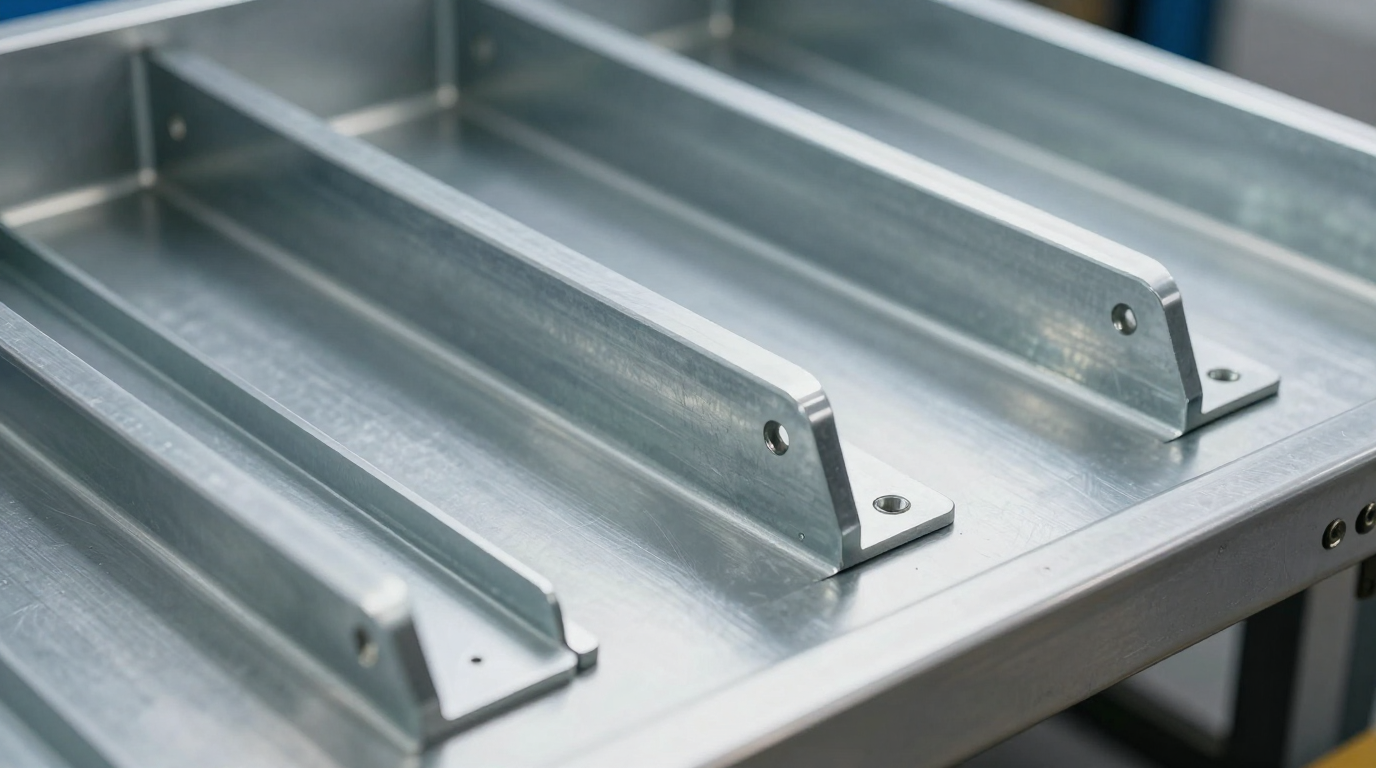
Sheet metal is one of the most efficient and cost-effective processes for producing enclosures, brackets, panels, and structural components. However, small design decisions can significantly affect manufacturability, cost, lead time, and final part quality.This guide covers practical sheet metal design tips specifically for enclosures and brackets, helping you create parts that are easier and more economical to manufacture.
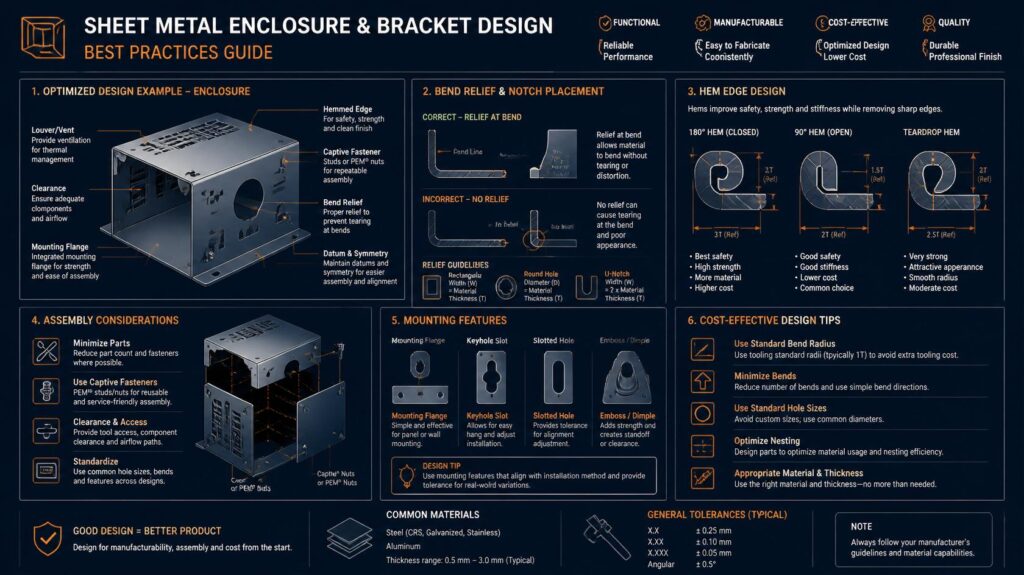
Why Good Sheet Metal Design Matters
Well-designed sheet metal parts:
- Reduce forming and welding complexity
- Minimize material waste
- Improve dimensional consistency
- Lower overall production cost
- Shorten lead times
Poor design choices, on the other hand, often lead to higher scrap rates, additional secondary operations, or the need for custom tooling.
1. Use Appropriate Bend Radii
The inside bend radius is one of the most important factors in sheet metal design.
Recommendations:
- Keep the inside bend radius equal to or greater than the material thickness
- Avoid extremely tight bend radii, which can cause cracking or deformation
- Maintain consistent bend radii across the part when possible
Larger bend radii generally improve formability and reduce stress on the material.
2. Maintain Proper Hole-to-Edge and Hole-to-Bend Distances
Holes placed too close to edges or bend lines are a common source of distortion and quality issues.
Best practices:
- Keep holes at least one material thickness away from edges
- Maintain sufficient distance between holes and bend lines (typically 1.5× to 2× material thickness or more)
- Avoid placing holes directly on bend lines
Proper spacing helps maintain dimensional accuracy and prevents material deformation during bending.
3. Add Bend Relief Where Needed
When bends are located near edges or intersecting features, bend relief is often required to prevent tearing.
Guidelines:
- Add relief cuts near the ends of bends when features are close to the bend line
- Ensure relief size is appropriate for the material thickness and bend geometry
- Design reliefs that do not compromise structural strength
Including proper bend relief improves both manufacturability and part integrity.
4. Keep Wall Thickness Consistent
Sudden changes in material thickness or complex formed sections can create forming difficulties.
Tips:
- Use consistent material thickness throughout the part when possible
- Avoid combining significantly different thicknesses in a single design
- Consider how the part will be nested and cut from sheet stock
Consistent thickness simplifies both laser cutting and bending operations.
5. Design for Efficient Bending Sequences
The sequence of bends affects tooling, fixturing, and overall feasibility.
Recommendations:
- Avoid designs that require complex or colliding bend sequences
- Design flanges and features that allow access for press brake tooling
- Minimize the number of bends when possible without sacrificing function
Simpler bending sequences generally result in lower cost and faster production.
6. Consider Fastening and Assembly Features Early
Enclosures and brackets often require mounting holes, PEM inserts, weld nuts, or interlocking features.
Best practices:
- Clearly define fastening methods in the design stage
- Provide adequate flat areas for hardware installation
- Account for tool access when specifying inserts or welded fasteners
- Design self-locating or interlocking features when beneficial for assembly
Thinking about assembly early reduces the need for design changes later.
7. Apply Realistic Tolerances
Sheet metal forming involves springback and process variation. Overly tight tolerances increase cost and may not be necessary.
Guidelines:
- Apply tighter tolerances only to critical features
- Allow standard forming tolerances for non-critical dimensions
- Clearly identify which dimensions are functionally important
A realistic tolerance strategy improves both manufacturability and cost control.
Common Sheet Metal Design Mistakes to Avoid
- Placing holes too close to bend lines
- Using excessively tight bend radii
- Ignoring bend relief requirements
- Over-tolerancing non-critical features
- Designing features that interfere with tooling access
- Failing to consider assembly and fastening needs
Avoiding these issues can significantly reduce manufacturing cost and improve part quality.

Quick Design Checklist for Enclosures and Brackets
Before releasing your design, review the following:
- Is the bend radius appropriate for the material thickness?
- Are holes properly spaced from edges and bends?
- Is bend relief included where needed?
- Is material thickness consistent?
- Can the part be bent with standard tooling sequences?
- Are fastening and assembly features clearly defined?
- Are tolerances applied only where necessary?
Final Thoughts
Effective sheet metal design for enclosures and brackets focuses on formability, tooling access, and assembly efficiency. By following these practical guidelines, you can create parts that are easier to manufacture, more consistent in quality, and more cost-effective to produce.
If you would like feedback on your current enclosure or bracket design, our engineering team can review your files and provide practical recommendations.Ready to move forward? Submit your project details and we will review your design and provide a personalized quotation.