
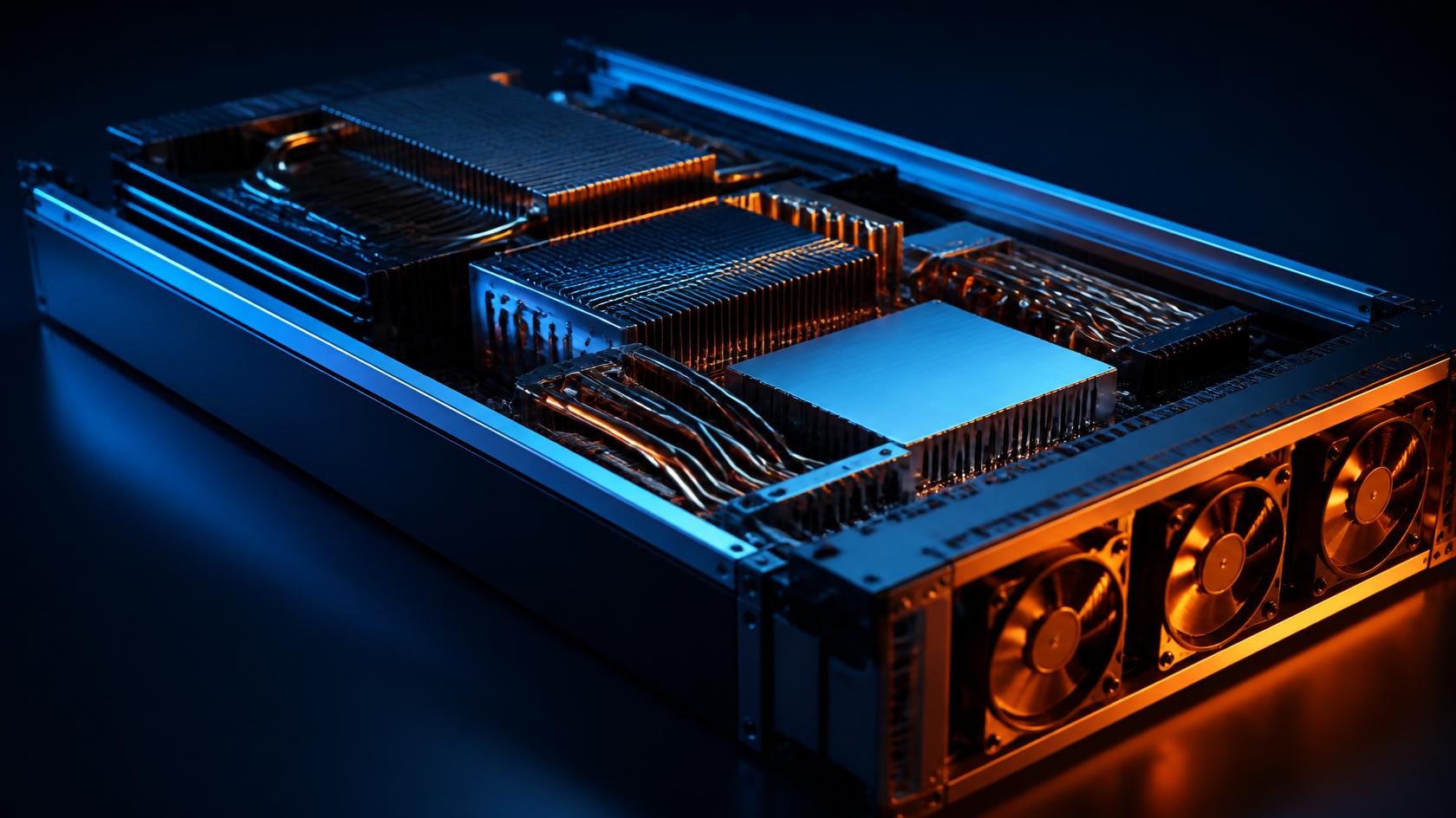
AI hardware generates significant heat and operates under demanding performance conditions. Whether you are designing AI servers, edge computing devices, accelerators, or high-performance computing systems, material selection plays a critical role in thermal management, structural integrity, weight, and manufacturability.
This guide focuses on the most relevant materials for two key areas of AI hardware: thermal management components and enclosures.
Why Material Selection Matters in AI Hardware
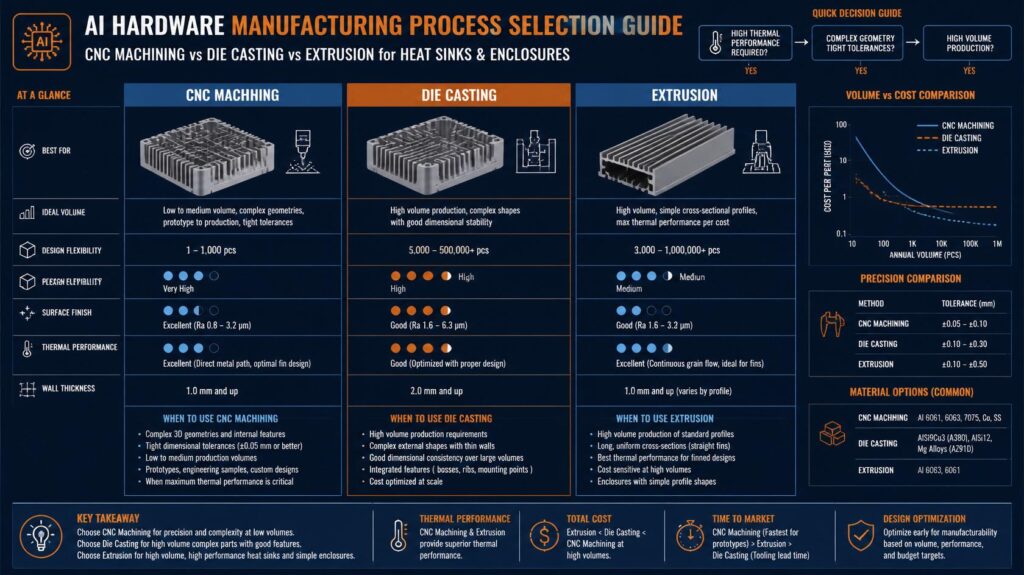
AI systems, especially those using high-power GPUs and accelerators, face several engineering challenges:
- High heat density that requires efficient thermal dissipation
- Need for lightweight yet rigid structural support
- Electromagnetic compatibility and shielding requirements
- Tight packaging constraints
- Reliability under continuous operation
Choosing the right materials directly affects cooling performance, system stability, and overall product cost.
Materials for Thermal Management
Effective thermal management is one of the highest priorities in AI hardware design. Common components include heat sinks, cold plates, heat spreaders, and thermal interface structures.
Aluminum Alloys
Aluminum is the most widely used material for heat sinks and many thermal components.
Key advantages:
- Excellent thermal conductivity
- Lightweight
- Good machinability
- Cost-effective
- Compatible with CNC machining and extrusion
Common grades:
- 6061 – Versatile and easy to machine
- 6063 – Often used for extruded heat sink profiles
- Higher-purity aluminum alloys for improved conductivity in demanding applications
Aluminum is typically the first choice for air-cooled heat sinks and many cold plate designs.
Copper
Copper offers significantly higher thermal conductivity than aluminum and is used when maximum heat transfer is required.
Key advantages:
- Superior thermal conductivity
- Excellent performance in high-heat-flux applications
Limitations:
- Heavier than aluminum
- More expensive
- More challenging to machine
Copper is commonly used in high-performance heat sinks, vapor chambers, and liquid cooling cold plates for AI accelerators.
Other Thermal Materials
- Copper-aluminum hybrid designs – Combine copper’s conductivity with aluminum’s weight and cost advantages
- Specialty alloys and composites – Used in advanced or highly constrained thermal solutions
Materials for Enclosures and Structural Components
Enclosures, chassis, brackets, and structural frames protect internal components and support mechanical integrity.
Aluminum
Aluminum remains the dominant material for AI hardware enclosures and structural parts.
Why it works well:
- Lightweight
- Good strength-to-weight ratio
- Excellent corrosion resistance
- Easy to machine and form
- Supports a wide range of surface finishes (anodizing, powder coating, etc.)
It is widely used for server chassis, edge device housings, and internal structural brackets.
Stainless Steel
Stainless steel is selected when higher strength, durability, or specific environmental resistance is required.
Typical use cases:
- Structural frames
- Mounting brackets under higher loads
- Environments requiring superior corrosion resistance
It is heavier and more expensive than aluminum, so it is usually reserved for critical structural elements.
Engineering Plastics
For certain non-structural covers, insulating components, or lower-power edge devices, engineering plastics can be suitable.
Common options:
- ABS
- Polycarbonate (PC)
- PC/ABS blends
- Other high-performance plastics depending on thermal and mechanical requirements
Plastics are generally not used for primary thermal paths but can be effective for housings and covers.
Key Factors When Selecting Materials for AI Hardware

When choosing materials, evaluate the following:
| Factor | Consideration |
| Thermal conductivity | Critical for heat sinks and cold plates |
| Weight | Important for edge devices and dense server racks |
| Strength and rigidity | Required for structural and mounting components |
| Manufacturability | Affects cost and lead time (CNC, sheet metal, etc.) |
| Corrosion resistance | Relevant for long-term reliability |
| Cost | Must be balanced against performance requirements |
| Electromagnetic shielding | Important for certain enclosure designs |
Practical Recommendations
For thermal management components:
- Start with aluminum for most heat sinks and standard cooling solutions
- Move to copper or hybrid designs when heat density is very high
- Prioritize designs that can be efficiently CNC machined or formed
For enclosures and structural parts:
- Use aluminum as the default material for most chassis and housings
- Select stainless steel only where higher strength or specific environmental resistance is required
- Consider plastics for non-critical covers or lower-power devices
Design tip: Coordinate material selection early with manufacturing constraints. A thermally excellent design that is difficult or expensive to produce may not be practical at scale.
Final Thoughts
Material selection for AI hardware requires balancing thermal performance, structural needs, weight, and manufacturability. Aluminum remains the most versatile and widely used option for both thermal components and enclosures, while copper and stainless steel serve more specialized high-performance roles.
Choosing the right material early in the design process helps improve cooling efficiency, reduce risk, and control production cost.
If you are developing AI hardware components and need support with material selection or manufacturability, our engineering team can review your requirements and recommend practical solutions.
Ready to move forward? Submit your project details and files athttps://protoparthub.com/contact/, and we will provide a personalized recommendation and quotation.